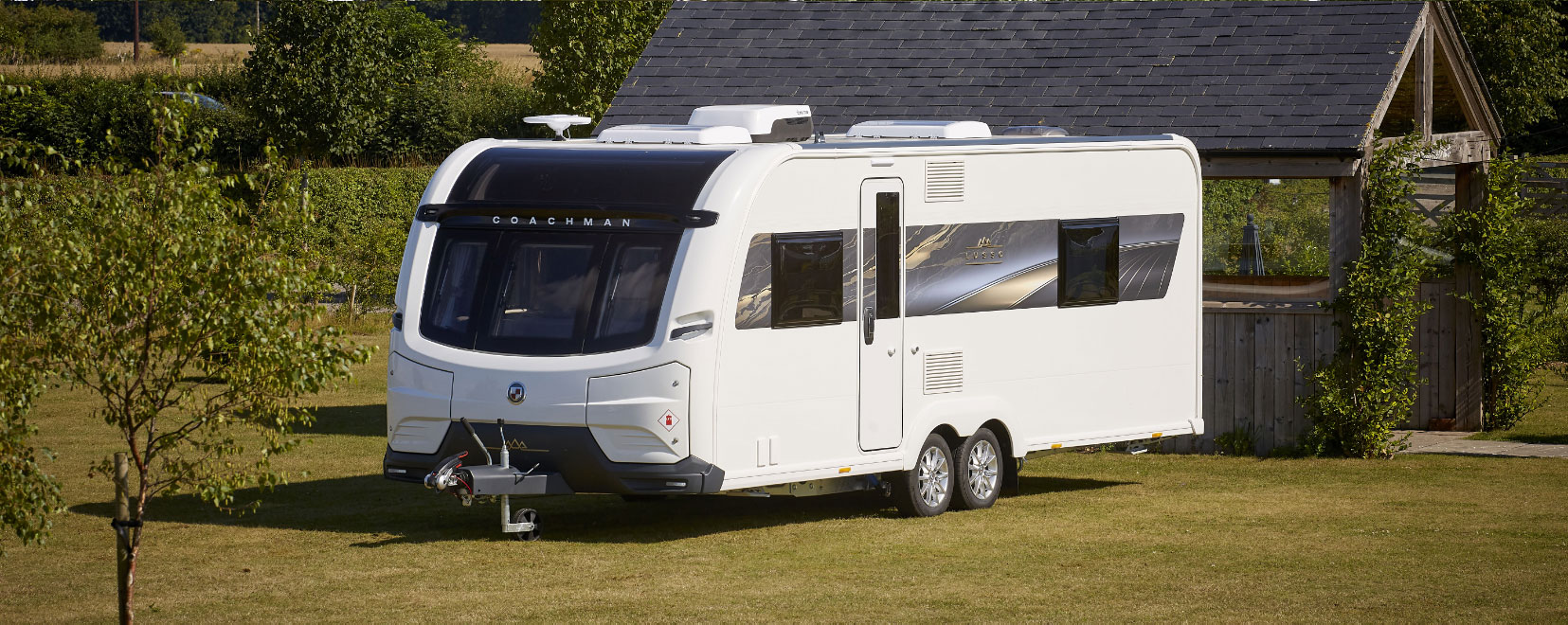
When comparing 2-berth vs 4-berth caravans, the right choice is not determined solely by how many people will be travelling. While a two-berth caravan is often ideal for couples, many couples choose a four-berth model because they want a permanent bed, additional living space or room for occasional guests.
A two-berth caravan will generally be shorter, lighter and easier to manage. A four-berth caravan normally provides a more clearly defined bedroom and living area, but its additional size and weight may require a more capable tow car.
The best option depends on your touring plans, preferred layout and how you want to use the caravan once you arrive.
What is the difference between a 2-berth and a 4-berth caravan?
A caravan’s berth number refers to the number of people it is designed to sleep.
In a two-berth caravan, the front lounge usually converts into either a double bed or two single beds. As the same area is used for relaxing, dining and sleeping, there is no need for a separate fixed bedroom.
Most Coachman four-berth caravans include a permanent double bed or two fixed single beds. The front lounge can then be converted into additional sleeping accommodation when required.
This means a four-berth model is not necessarily intended only for a family of four. It can also give two people a permanent bedroom while retaining the front lounge as a separate living space throughout the day.
Why choose a 2-berth caravan?
A two-berth caravan is a strong choice for couples and solo tourers who want a comfortable interior without towing a larger caravan than they need.
The principal advantage is that space is used efficiently. Instead of dedicating part of the caravan to a fixed bed, the front lounge performs several functions. During the day it provides seating and dining space. At night it can be made into a double bed or used as two singles.
Because Coachman’s two-berth caravans are among the more compact models in their respective ranges, they are also easier to manoeuvre, store and position on a pitch. Their lower MTPLM figures can make them suitable for a broader selection of tow cars, although towing compatibility must always be confirmed against your vehicle’s handbook before purchase. See MTPLM figures here
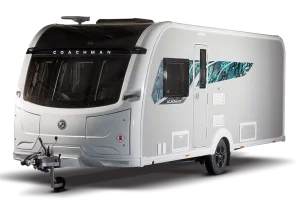
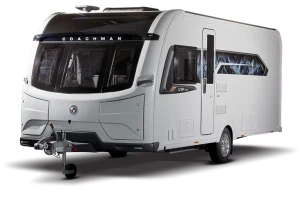
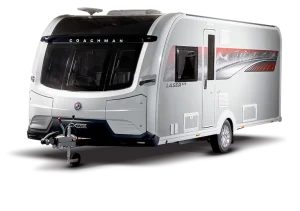
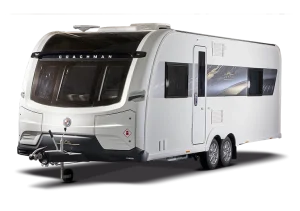
Coachman currently offers four distinctive two-berth touring caravans.
The Coachman Acadia 460 is the most compact model in the Acadia range. It has a single-axle layout, a spacious front lounge and a generously sized rear washroom. The lounge can be arranged as two single beds or converted into a double bed.
The Coachman VIP 460 provides a similar front-lounge and rear-washroom arrangement with the upgraded comfort and specification associated with the VIP range. Its front seating can also be used as two singles or converted into a large double bed.
The Coachman VIP 545 takes a different approach, offering a fixed island bed and central washroom within a two-berth layout. It is a strong option for couples who want the convenience of a permanent bed without moving into a four-berth caravan.
For couples wanting greater interior width, the Coachman Laser 480 Xtra is an eight-foot-wide, single-axle two-berth caravan. Its wider body creates a particularly open living space while retaining the flexible no-fixed-bed layout traditionally associated with a two-berth tourer.
Are there any disadvantages to a 2-berth caravan?
The main compromise in a no-fixed-bed two-berth is the absence of a permanent bed. Bedding must be stored during the day, and the lounge needs to be converted before sleeping. For occasional touring this may be a small consideration, but couples taking longer trips may prefer the convenience of leaving a bed made up throughout their stay – in which case the VIP 545’s fixed island bed is worth considering.
A convertible lounge layout also provides less separation between daytime and nighttime spaces. Once the bed has been assembled, the main lounge is no longer available in its usual form. There is also less flexibility should friends, children or grandchildren want to join you.
Why choose a 4-berth caravan?
A four-berth caravan offers greater flexibility. It can accommodate additional travellers, but it can also give two people a more spacious and convenient touring experience.
Most Coachman four-berth models pair a permanent sleeping area with a front lounge that converts into another bed. This allows couples to leave the main bed prepared while continuing to use the lounge throughout the day.
There is also a much broader choice of bedroom layouts. Depending on the model, buyers can choose between transverse double beds, island beds and permanent twin single beds. Coachman’s four-berth collection also includes both single- and twin-axle caravans, allowing you to balance manoeuvrability against interior space.
Within the Acadia range, the Acadia 545 and Acadia 575 are four-berth, single-axle models with fixed double beds. Their different arrangements allow buyers to select the bedroom and washroom configuration that best suits their touring routine.
The VIP range offers two four-berth choices. The VIP 565 provides two permanent single beds, while the VIP 575 features a fixed double bed. Both remain on single-axle platforms.
For additional interior width, the Laser range includes six four-berth models. The Laser 545 Xtra and Laser 575 Xtra are single-axle models, while the Laser 845 Xtra, Laser 855 Xtra, Laser 865 Xtra and Laser 875 Xtra use twin-axle platforms. The 865 Xtra has permanent single beds; the other models feature fixed doubles.
At the top of the Coachman collection, all four Lusso models are four-berth caravans. The Lusso I is a single-axle model, while the Lusso II, Lusso III and Lusso IV are twin axle. Options include transverse double-bed layouts, wide permanent single beds and the private rear bedroom of the Lusso IV.
Are there any disadvantages to a 4-berth caravan?
A four-berth model will generally be longer and heavier than a two-berth alternative. This can affect the tow car you require, where the caravan can be stored and how easily it can be manoeuvred.
Larger twin-axle models can provide exceptional living space and stability, but they may be more demanding to position than a compact single-axle caravan. Buyers should consider where they plan to tour, the size of their usual pitches and whether they frequently visit sites with tighter access.
There may also be little benefit in paying for additional sleeping accommodation if you prefer a compact caravan and are happy making up the bed each evening.
Comparing 2-berth vs 4-berth caravans for couples
A two-berth model is likely to suit you when you mainly take shorter breaks, prioritise easier towing and are comfortable converting the lounge into a bed each night. It can provide everything two people need within a compact and efficient layout.
A four-berth model may be better when you take longer holidays, want a permanent bed or prefer separate spaces for sleeping and relaxing. It also gives you more flexibility when guests occasionally travel with you.
When considering 2-berth vs 4-berth caravans, think about how you will use the interior throughout an entire day rather than concentrating only on its maximum sleeping capacity.
Which caravan is better for first-time buyers?
Both sizes can work well for a first caravan.
A two-berth model may feel less daunting because of its more manageable dimensions. The Acadia 460, VIP 460, VIP 545 and Laser 480 Xtra give first-time buyers a range of space, specification and layout options without the need to move directly into a larger caravan.
However, buying a caravan that is too small for your future plans can lead to an earlier upgrade. A four-berth model may be a better long-term choice if you expect to take longer holidays, travel with other people or value the convenience of a permanent bed.
Your available tow car, storage arrangements and preferred campsites should form part of the decision from the beginning.
2-berth vs 4-berth caravans: Which should you choose?
Choose a two-berth caravan when compact dimensions, efficient use of space and straightforward touring are your main priorities. It is particularly suitable for couples who do not need a fixed bed and want to keep the overall size of their caravan manageable.
Choose a four-berth caravan when you want a permanent bedroom, more layout options or the flexibility to accommodate additional travellers. It may also be the stronger choice for couples planning extended tours and spending more time inside their caravan.
There is no universally better option in the 2-berth vs 4-berth caravans debate. The best caravan is the one that supports your preferred way of travelling without adding unnecessary size or compromising the comfort you value.
Explore the complete Coachman caravan collection or find your nearest Coachman dealer to compare the layouts in person.