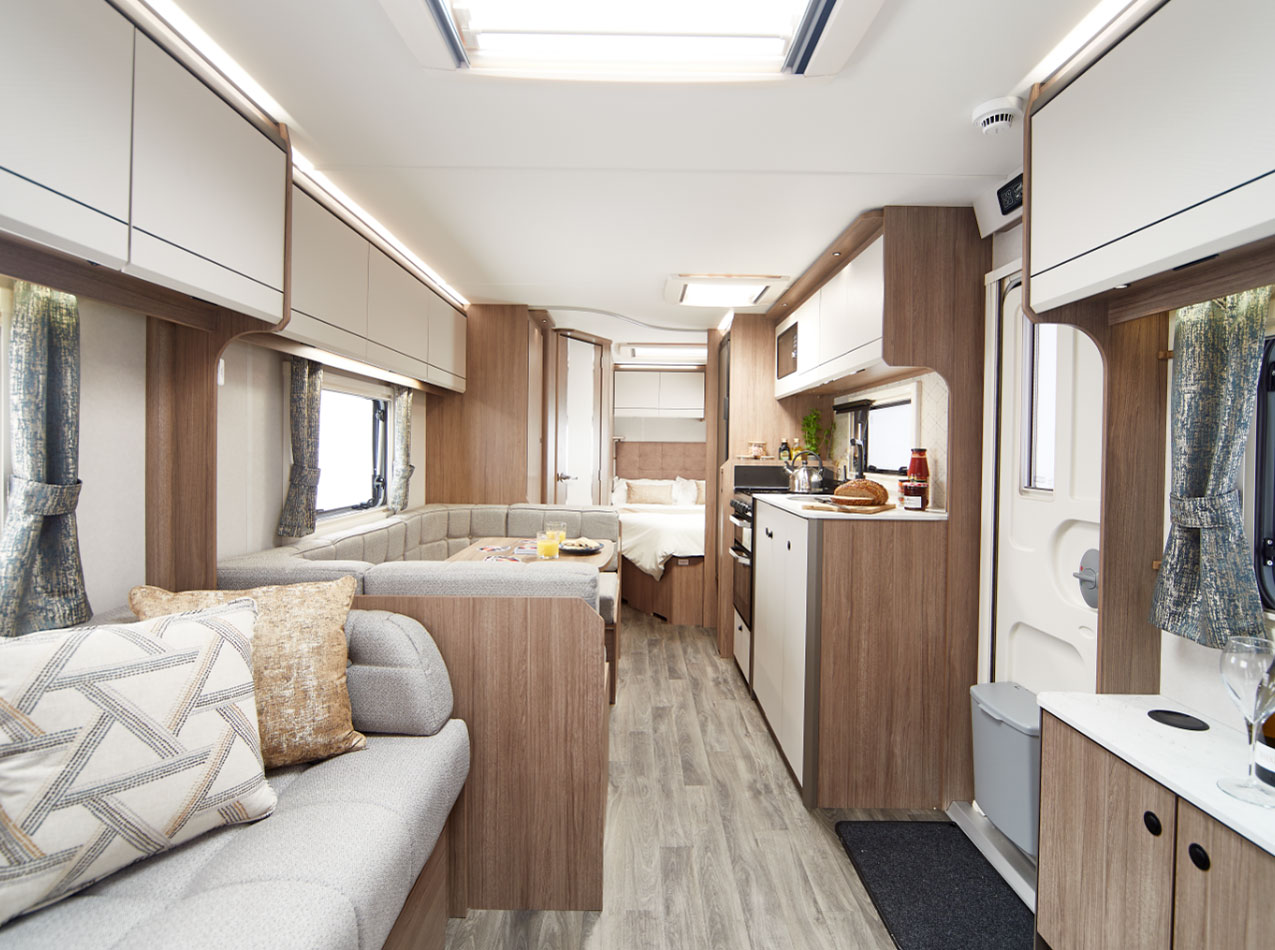
A well-organised touring caravan is easier to tow, quicker to set up and far more comfortable to live in. The challenge is not simply fitting everything inside. You also need to keep the caravan within its permitted weight, distribute the load safely and make everyday items easy to reach.
The most effective caravan storage solutions UK tourers can use begin before anything is packed. By deciding what you genuinely need, assigning every item a permanent place and using the caravan’s built-in storage properly, you can avoid clutter without sacrificing comfort.
Premium layouts such as the Coachman Laser and Coachman Lusso provide generous storage throughout their lounges, kitchens and fixed-bed areas. However, even a spacious caravan needs to be loaded carefully.
This guide explains how to organise your touring caravan room by room, what to store in different compartments and how to avoid common packing mistakes.
Caravan storage solutions UK owners should prioritise
The best caravan storage system should achieve five things: keep the caravan within its permitted weight, position heavy items safely, prevent belongings from moving in transit, make frequently used items accessible, and reduce the amount of equipment carried unnecessarily.
Adding more boxes, organisers and containers is not always the answer. In many cases, the biggest improvement comes from removing items that are rarely used.
Before every trip, divide your belongings into three categories: items you use every day, items needed occasionally or in emergencies, and items you normally pack but almost never use. The third category is where most unnecessary weight and clutter can be removed.
Understand payload before packing
A caravan can have a large number of cupboards and lockers without having unlimited carrying capacity.
Your personal payload may need to cover clothing, food and drinks, bedding, outdoor furniture, cooking equipment, televisions and electronics, leisure equipment, optional accessories, gas bottles and personal belongings.
The caravan’s Maximum Technically Permissible Laden Mass, or MTPLM, is the maximum permitted loaded weight. The difference between the caravan’s Mass in Running Order and its MTPLM determines the amount available for personal payload. Coachman’s FAQ on MRO, MTPLM and user payload explains these figures in more detail for owners who want to understand exactly how the calculation works.
Do not assume that an empty-looking locker can safely be filled. A caravan should ideally be weighed when fully loaded for a typical holiday, including food, clothing, gas and accessories.
Store heavier items low and close to the axle
Weight distribution affects how stable a caravan feels when being towed.
Place heavier equipment as low as practical, close to the caravan’s axle, evenly across both sides, and inside secure floor-level compartments. Avoid concentrating heavy items at the very front or rear. Excessive rear loading can reduce noseweight and contribute to instability, while excessive front loading may place too much weight on the tow ball.
Suitable items for lower central storage include pans, tinned food, bottled drinks, tool kits, electrical equipment and levelling accessories.
Large storage spaces beneath fixed beds are useful, but they should not automatically become the home for every heavy item. The location of the bed in relation to the axle must still be considered.
Use overhead lockers for lightweight belongings
Overhead cupboards are best used for light items that will not cause injury or damage if a locker is opened unexpectedly.
Good overhead-locker items include folded clothing, towels, lightweight food packets, empty food-storage containers, paper products, games and books, and lightweight toiletries.
Avoid storing tins, glass bottles, heavy pans or tools at head height.
Use small baskets or fabric containers to divide wide lockers. This prevents belongings from sliding from one end to the other and makes it easier to remove one category of items without emptying the entire cupboard. Make sure every locker catch closes correctly before travelling.
Organise the caravan kitchen by activity
Caravan kitchens are easier to use when belongings are grouped according to what you do with them.
Create dedicated areas for hot drinks, breakfast, cooking utensils, plates and bowls, cleaning products, dry ingredients, snacks and food-storage containers. Keep the most frequently used equipment near the main worktop. Items used only occasionally can be placed in deeper cupboards.
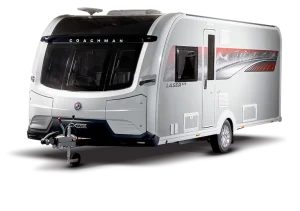
The Coachman Laser range includes ergonomic kitchens with deep storage cabinets, soft-close cabinetry and carefully planned preparation areas. These larger cabinets can accommodate useful cooking equipment, but internal organisers help prevent the space from becoming a single untidy compartment.
Useful kitchen organisers include non-slip drawer liners, stackable pans, nesting bowls, plate separators, small removable baskets, airtight rectangular containers and clips for opened food packets.
Square and rectangular containers normally use cupboard space more efficiently than round containers.
Avoid carrying a full home kitchen
One of the most common packing mistakes is attempting to recreate a complete domestic kitchen inside the caravan.
Most holidays do not require several frying pans, large collections of mugs, multiple sets of plates, specialist appliances, full-sized food packages or duplicate utensils.
Pack according to the number of people travelling and the meals you realistically expect to prepare. A couple taking a weekend break will need significantly less equipment than a family touring for three weeks. Even on a longer trip, food and household supplies can usually be replenished locally.
Make better use of fixed-bed storage
Fixed beds create valuable storage because the bed occupies a large section of the floorplan that might otherwise be unused beneath the mattress.
The Laser’s fixed-bed layouts include overhead lockers and gas-strut-assisted lift-up bed frames, helping owners access the area below without removing the mattress.
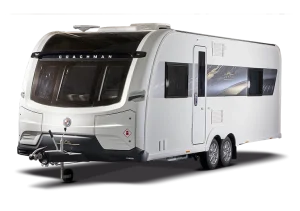
The Coachman Lusso range also provides gas-strut-assisted storage beneath its fixed beds. This space can be accessed internally and, in relevant layouts, through an exterior locker, making it particularly useful for touring equipment.
Under-bed storage is well suited to bedding, outdoor clothing, walking boots, folded outdoor furniture, awning accessories, lightweight leisure equipment, spare towels and seasonal clothing.
Place belongings in zipped fabric bags or low-profile containers rather than leaving them loose. Clear labels make it easier to locate equipment without lifting and searching through several bags. Check that containers do not obstruct heating, ventilation, pipework or other caravan systems.
Lusso storage for extended touring
The Lusso is Coachman’s flagship touring caravan range and is particularly well suited to owners who spend longer periods away.
Its storage advantages include lift-up fixed-bed storage, external access to under-bed compartments, soft-close kitchen storage, overhead lounge and bedroom lockers, wardrobe space, integrated furniture storage and a coordinating storage footstool.
The exterior-access compartment is particularly helpful for items that are used outside. Equipment can be retrieved without carrying it through the caravan or disturbing the bedroom.
Good items for exterior-access storage may include levelling accessories, outdoor mats and lightweight campsite equipment, provided the caravan remains safely loaded.
The Lusso’s generous storage capacity should still be balanced against the published personal payload for the chosen model. More physical space does not remove the need to monitor weight.
Laser storage for couples and families
The Laser range offers seven wide-bodied layouts, including single and twin-axle options. The eight-foot-wide body creates more interior room, but one of the main practical benefits is the ability to incorporate useful cabinets and fixed-bed storage without making the living area feel restricted.
Depending on the chosen layout, Laser owners may benefit from deep kitchen cabinets, overhead lounge lockers, lift-up fixed-bed compartments, wardrobe storage, bedside cabinets, washroom cupboards and under-seat lounge storage.
The best Laser layout will depend on what you carry. A couple choosing the two-berth Laser 480 Xtra may prioritise lounge and kitchen storage, while owners selecting a larger fixed-bed model may want convenient space for longer holidays.
Explore the complete Coachman Laser collection to compare the available arrangements.
Keep the lounge clear
The lounge is usually the most frequently used part of a touring caravan. It can quickly become cluttered with jackets, shoes, charging cables and bags.
Give everyday items a defined place: store shoes near the entrance, place remote controls in one small basket, keep charging cables together, hang jackets in the wardrobe, put books and games in one locker, and return cushions and blankets after use.
Avoid using the floor as temporary storage. Bags placed in walkways create trip hazards and make the caravan feel much smaller.
Under-seat compartments can be useful, but consider how often they need to be opened. Items required several times a day should not be buried beneath seating, bedding or bed slats.
Create an organised entrance area
The entrance is where outdoor equipment, wet clothing and shoes usually accumulate.
A simple arrival system can include one washable shoe mat, a small container for keys, a reusable bag for wet items, a designated dog-towel area, hooks approved for caravan use and a compact torch near the door.
Avoid attaching heavy organisers to walls or doors without checking that the fixings and surfaces are suitable. Drilling into caravan panels can damage finishes, wiring or insulation. Freestanding or removable storage is often safer than permanent DIY alterations.
Organise the washroom with small containers
Caravan washrooms contain several small items but usually have limited shelf space.
Use compact containers for dental products, first-aid supplies, medicines, shower products, cleaning equipment and toilet chemicals.
Choose travel-sized products or refillable containers where practical. Large domestic bottles occupy unnecessary space and add weight.
Keep toilet chemicals upright and separate from food or personal-care items. Make sure lids are secure before travel. Remove loose bottles from shower shelves before towing unless the storage is specifically designed to hold them in transit.
Use the wardrobe vertically
Wardrobes often have unused space beneath hanging clothes. This area can be organised with lightweight fabric drawers, shoe bags, folded laundry baskets, packing cubes and small lidded containers.
Use slimmer hangers to improve hanging capacity, but avoid packing clothes so tightly that air cannot circulate.
Pack complete outfits rather than large quantities of individual items. Neutral layers that can be worn in different combinations are more efficient than bringing a separate outfit for every day.
Separate travel-day and campsite equipment
Some items are required during the journey, while others are only used after pitching.
Travel-day essentials may include documents, medication, phone chargers, snacks, water, jackets, a torch and a first-aid kit.
Campsite equipment may include the electric hook-up cable, water equipment, waste-water containers, levelling ramps, outdoor furniture and awning accessories.
Keep travel essentials somewhere accessible without opening exterior lockers at a service station or roadside stop. Equipment needed immediately on arrival should also be easy to reach. Levelling ramps are not useful when they are buried beneath chairs, boxes and bedding.
Pack clothing in sets
Packing cubes are one of the simplest caravan storage solutions UK holidaymakers can introduce. Use separate cubes for underwear and socks, nightwear, everyday clothing, outdoor clothing, swimwear and laundry. Each traveller can have a different set of cubes, reducing the need to search through shared cupboards.
Soft packing cubes are usually better than rigid suitcases because they adapt to the shape of lockers. Once unpacked, empty bags can be folded flat.
Prepare for wet British weather
Storage planning should account for the possibility of rain, even during summer.
Carry a dedicated wet-weather kit containing waterproof jackets, compact umbrellas, spare footwear, microfibre towels, waterproof bags and a mat for muddy shoes.
Keep wet items away from bedding and upholstery. Do not store damp clothing inside sealed lockers for extended periods, as this can create condensation and unpleasant odours. Allow wet equipment to dry before returning it to long-term storage.
Use a permanent caravan inventory
Create a list of everything that normally remains in the caravan. Your inventory could cover kitchen equipment, bedding, cleaning supplies, touring accessories, electrical cables, safety equipment, washroom products and outdoor furniture.
Before leaving, check the inventory rather than packing from memory. After returning home, note anything that was unused. When an item remains untouched across several holidays and is not needed for safety or emergencies, consider removing it permanently. Your nearest Coachman dealer can also help with technical questions about your caravan’s payload, storage compartments and specification.
Secure everything before towing
Good organisation must also be safe during travel.
Before departure: close every cupboard and drawer, secure the fridge, remove items from worktops, store freestanding appliances, place heavy equipment low down, check exterior lockers, secure the television, empty open shelves, lock the shower door and remove loose washroom products.
Walk through the caravan immediately before towing. Imagine how each object would move during sudden braking or a sharp turn. An item that appears stable while parked may move considerably on the road.
Common caravan storage mistakes
Packing every cupboard completely
Full cupboards make it harder to find items and encourage unnecessary loading.
Buying organisers before planning
Measure the compartment and decide what it will contain before purchasing boxes or baskets.
Storing heavy items overhead
Upper lockers should contain lightweight belongings only.
Ignoring weight distribution
Payload must be positioned safely, not simply fitted wherever space remains.
Carrying duplicates
Check what is already in the caravan before packing another set of utensils, cables or cleaning products.
Blocking ventilation
Storage must not cover heaters, vents, air gaps or system access points.
Leaving items loose
Everything should have a secure travelling position.
Frequently asked questions
What are the best caravan storage solutions for UK touring?
The most useful solutions include packing cubes, non-slip drawer liners, stackable kitchen equipment, labelled fabric bags and small baskets for dividing larger lockers. Good weight distribution is more important than the number of organisers used.
What should be stored under a caravan bed?
Under-bed compartments are suitable for bedding, clothing and lightweight touring equipment. Heavy items should only be placed there after considering the position of the bed, axle limits and overall weight distribution.
Can I fill every storage locker in my caravan?
No. Available physical space and available payload are not the same. Your caravan must remain within its MTPLM and axle limits.
Where should heavy items be packed?
Heavy belongings should generally be stored low down and close to the axle, with weight balanced between both sides of the caravan.
Does the Coachman Lusso have external storage access?
The Lusso provides storage beneath its fixed beds that can also be accessed externally, helping owners reach touring equipment without carrying it through the living area.
What storage does the Coachman Laser offer?
Laser models feature deep kitchen storage, soft-close cabinetry, overhead lockers and, on fixed-bed layouts, gas-strut-assisted access to the storage beneath the bed.
Make your caravan storage work harder
The best caravan storage solutions UK owners can adopt are simple, lightweight and designed around how the caravan is actually used.
Start by reducing unnecessary equipment. Store heavier belongings low and near the axle, reserve overhead lockers for lightweight items and organise each compartment by purpose.
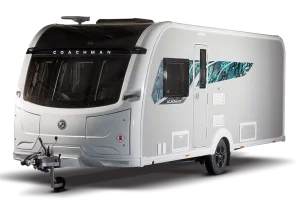
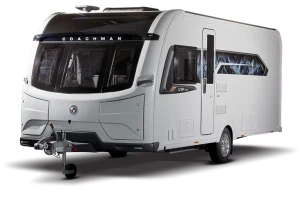
Every Coachman caravan range is designed with storage as a genuine priority. The Acadia and VIP ranges offer well-planned lockers, kitchen cupboards and washroom storage suited to couples and families who tour regularly. The Laser adds generous under-bed compartments and deep cabinetry across its eight-foot-wide layouts, while the Lusso takes storage further with exterior-access under-bed compartments and premium fitted furniture designed for extended touring.
View the full Coachman touring caravan range or find your nearest Coachman dealer to explore the storage, layouts and specifications in person.